
Two hotels sell the same thing. One lists "One Night, Deluxe Room, $220." The other lists "A Slow Sunday: late checkout, breakfast in bed, and an afternoon that belongs to you." Same room. Same rate. Completely different sale.
Around 60% of gifts bought in 2025 were named experiences rather than objects. The global experience gift market sits near $133 billion and is on track for $199 billion by 2030. Buyers have already moved. Most hotel gift programmes still describe inventory when the person holding the credit card is shopping for a feeling.
Repositioning a gift programme is rarely a systems problem. It is a language problem. Here is how the best properties are fixing it.
The Buyer Isn't Shopping for a Room. They're Shopping for a Moment to Give.
Someone buying a gift voucher is picturing a reaction. They imagine the person opening it, the smile, the "you didn't have to." That picture is the product. A room type does not deliver it, because nobody unwraps a gift and feels moved by the words "Deluxe King."
Smart operators write the storefront for the giver's imagination, not the revenue manager's spreadsheet. The rate stays the same. The story does the selling.
People don't gift room categories. They gift the afternoon someone will remember.
"One Night in a Deluxe Room" Describes Inventory. "A Slow Morning Away" Describes a Gift.
Inventory language is precise and lifeless. It answers questions the buyer isn't asking. Nobody is choosing a birthday present based on thread count and square metres.
The fix is to name the moment the room makes possible. "A Slow Morning Away" carries late checkout, breakfast, and permission to do nothing. Same components, reframed as an experience the giver can already feel proud of handing over. Three-quarters of people who moved spending toward experiences did it because experiences feel like better value than another object. Your wording should meet them there.
Describe what the guest gets to feel, and the rate stops being the headline.
Repositioning Starts With the Occasion, Not the Amenity
Buyers arrive with a reason: an anniversary, a new job, a hard year that deserves a soft weekend. The programme that converts organises itself around those reasons. "For the couple who never gets a night off." "For the friend who needs to be looked after." The amenities sit underneath, quietly delivering.
Build the shelf around occasions and the buyer recognises their own situation instantly. Build it around amenities and you have made them do the translation themselves. One approach earns the sale. The other asks the buyer to work for it.
Sell the reason first. The room is how you keep the promise.
Your Photography Is Selling the Building When It Should Sell the Feeling
Most hotel gift pages lead with architecture: the lobby, the facade, the empty perfectly-made bed. Impressive, and emotionally flat. A gift buyer feels nothing looking at a vacant room.
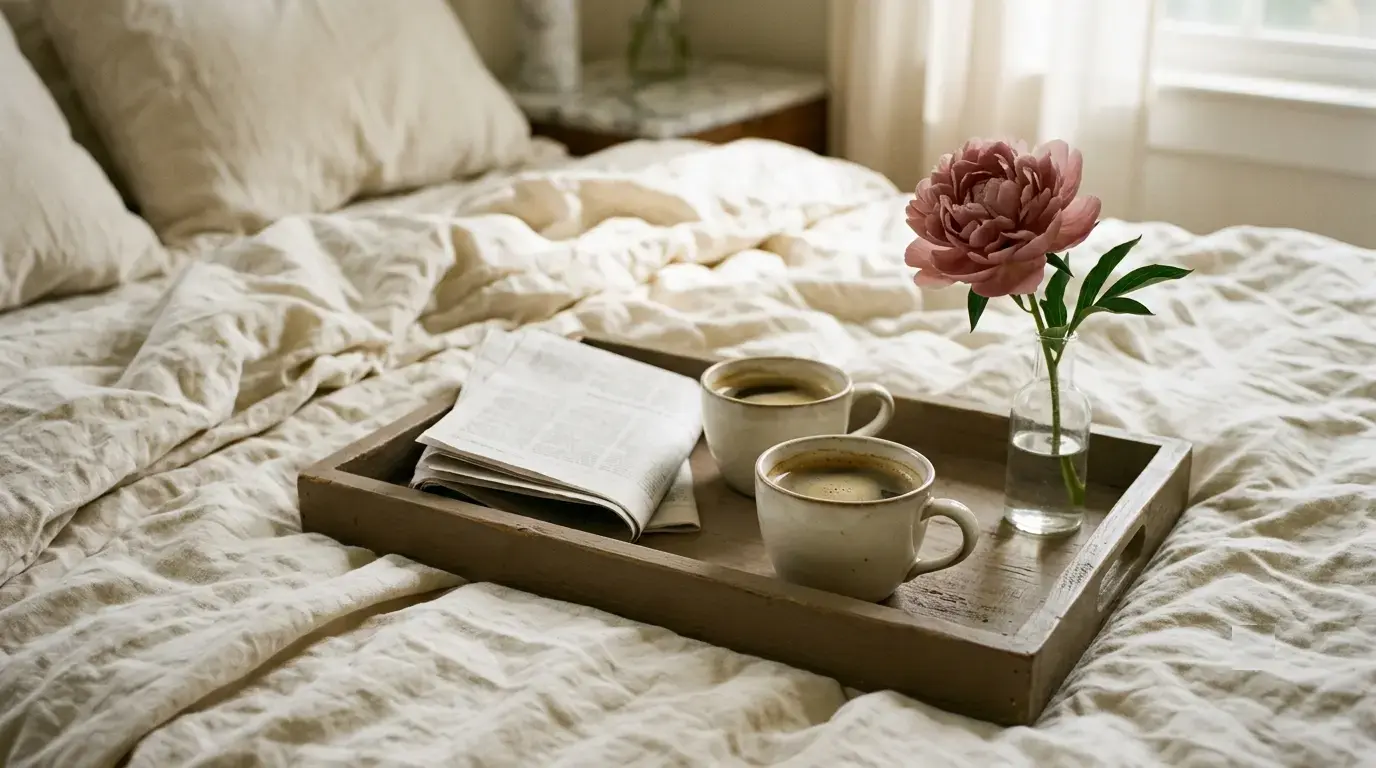
Lead instead with the moment. Two coffees and a rumpled duvet at 10am. A robe, an open book, a view held for a beat longer than a brochure would. Occasion imagery does the persuasion that a wide-angle lobby shot never will, because it shows the giver exactly what they are giving.
A photo of the building says "we exist." A photo of the moment says "give this."
Price the Memory, Not the Room Type
When a voucher is framed as a room, buyers benchmark it against the nightly rate and hunt for the discount. When it is framed as a named experience, that comparison disappears. The buyer is no longer pricing a room. They are deciding whether the moment is worth giving, and a considered "yes" comes far more easily than a price check.
This is where a platform like Ryse earns its place: packaging a stay, a meal, and a touch of ceremony into one named experience with a single price, so the buyer never sees the rate card underneath. The memory carries the number. The room type stays out of sight.
Anchor the price to the experience and the discount question never gets asked.
The Properties That Reposition First Own the Language Everyone Else Copies
Repositioning is a first-mover advantage hiding in plain sight. The property that names "A Slow Sunday" or "The Anniversary That Finally Happens" defines the category in its market. Competitors who wait end up describing rooms while the leader describes moments, and the moments win the gift buyer every time.
The rework costs almost nothing. It is rewriting, reshooting, and re-shelving what the property already sells. The inventory does not change. The way it lands in a buyer's imagination changes completely.
A room is a commodity anyone can list. A memory is a product only you can name.
Common Questions About Repositioning a Hotel Gift Programme
What does it mean to reposition a hotel gift programme?
Repositioning means describing what you sell as an experience the buyer can picture giving, rather than as a room type or a nightly rate. The inventory stays the same. The wording, photography and pricing frame it around an occasion instead of a booking.
Why do experience vouchers outsell monetary gift cards?
A gift buyer is choosing a gesture, and a named experience shows thought in a way a cash amount cannot. Experiences also carry a set price, so buyers judge whether the moment is worth giving rather than hunting for a discount, which lifts average order value.
How much does it cost to reposition a hotel gift voucher programme?
Close to nothing in most cases. It is rewriting product descriptions, reshooting a few occasion-led photos, and re-shelving what the property already sells. The rooms and the rates do not change.
What imagery sells hotel gift experiences best?
Occasion imagery that shows the moment, such as two coffees and a rumpled duvet, outperforms wide shots of an empty room or lobby. The buyer needs to feel what they are giving, and a photo of the building does not deliver that.
If you want to reposition your gift programme around moments rather than room types, Ryse Cloud is built to package and price experiences exactly that way.