

Every hotel lives with the same awkward timing problem. You carry the cost of the building, the staff, and the marketing all year, but the revenue only lands when a guest actually stays. Book today, pay at checkout in three months. Your busiest sales periods and your tightest cash periods rarely line up, and finance spends a good part of the year managing the gap between them.
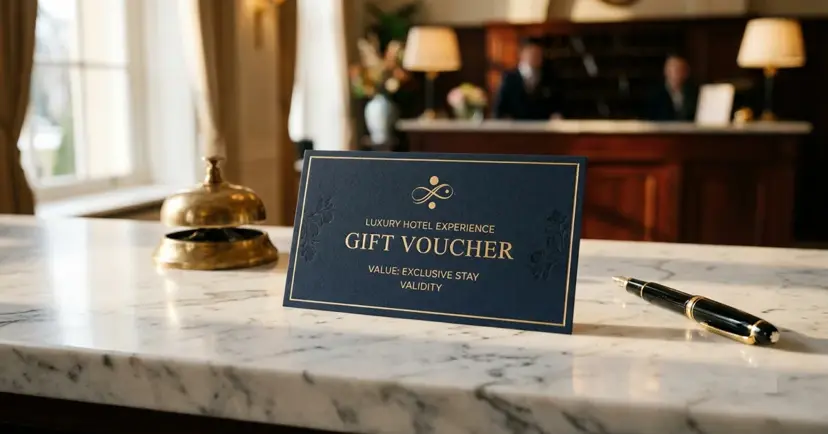
There is one product on your menu that breaks the pattern completely. A gift voucher is the only thing a hotel sells where the money arrives first and the delivery comes later, sometimes much later. Someone buys a spa afternoon or a weekend away in December, pays in full that day, and the guest might not walk through your doors until the following winter. Across APAC voucher data, redemption typically lags the sale by around two months, and a share are never claimed at all. For all those months, you are holding their cash.
That single quirk changes how gifting should sit in your revenue thinking. Most hotels file vouchers under "nice marketing extra". Read the cash mechanics properly and it looks a lot more like working capital you generated yourself.
The Balance Sheet Hides Cash You Are Already Holding
When you sell a voucher, accounting rules treat the money as a liability rather than revenue. You have taken payment for a service you still owe, so it sits as deferred income until the guest redeems it. On paper, a strong gifting month can read as a pile of obligations instead of a win.
The cash tells a different story. The payment cleared. It is in your account, earning its keep, funding payroll or a refurbishment or simply sitting as a buffer, long before you deliver anything in return. A voucher is a service you have already been paid to provide at a date of the buyer's choosing, and the lag between payment and delivery runs entirely in your favour.
Two things make that lag more valuable than it first looks. Redemption is slower than people expect, and a share of vouchers are never redeemed at all. Every unredeemed voucher becomes revenue you keep with no service cost behind it: no room cleaned, no table laid, no treatment given. Most hotels never calculate that figure, so it falls quietly to the bottom line without anyone crediting the programme for it.
Gifting Cash Arrives When Your Occupancy Is Thinnest
Gifting does not sell evenly through the year, and that is the useful part. It spikes around occasions: the December holidays, Valentine's Day, Mother's Day, Lunar New Year, the run of birthdays and anniversaries that cluster in particular months. Those peaks often land in your softer occupancy periods, when rooms are harder to fill and cash is thinner on the ground.
So the money comes in on one calendar and the service goes out on another. A December gifting surge helps fund a quiet January. Vouchers sold for a February occasion get redeemed across spring and summer. You are pulling revenue forward from your strongest demand moments and using it to cushion the troughs. Revenue teams already think this way about deposits and advance-purchase rates. A voucher programme does the same job, with a gift wrapped around it.
The Guest Who Spends Past the Face Value
A voucher is the start of a visit, and the visit is usually worth more than the voucher itself.
When someone redeems a gift, they rarely stop at exactly what was paid for. A spa voucher becomes a treatment plus a product off the shelf. A dinner voucher becomes the meal plus a bottle of wine and two extra courses. A one-night stay stretches into a second night, a late checkout, breakfast for two. Research across hospitality gifting consistently shows redeemed-voucher guests spending 60 to 70 percent more than the face value once they are on site. You banked the prepaid amount months ago. That extra on-property spend is pure upside layered on top of cash you already collected.
There is a quieter version of the same effect. A large share of voucher buyers are purchasing for themselves, often pre-committing to their own next visit. That is a guest pre-paying to come back, locking in future intent and revenue in a single click. Whichever way the voucher is bought, it goes to work long before redemption day.
A New Guest You Would Never Have Reached
When a voucher is genuinely given as a gift, the person who receives it is almost never someone who was already planning to book you. They may not have known your property existed. Someone who loves your hotel has just introduced it to a friend, a parent, or a partner, and paid for the introduction on your behalf.
No acquisition channel quite does that. Paid search, OTAs, and social ads all cost you money to reach a stranger who has shown a flicker of intent. A gift voucher delivers a stranger who arrives pre-sold, recommended by someone they trust, with the first visit already paid for. If they enjoy it, you have done more than rent a guest for a single stay. You have recruited a direct, repeat booker who might buy the next gift themselves.
Put the Number on the Dashboard
Stacked together, these mechanics pull gifting out of the "seasonal marketing" box. It is prepaid cash that smooths your year, a slice of pure-margin breakage almost nobody counts, an on-property spend uplift on money you collected months ago, and an acquisition engine that hands you guests no ad budget could buy.
The hotels that get the most from it are usually just the ones who decided to measure it. So here is the question worth carrying into your next revenue meeting: do you know how much cash your gifting programme is holding right now, and who on your team is accountable for growing it?
If the honest answer is a shrug, that shrug is expensive. A funded, low-risk revenue line is sitting unmanaged while everyone in the room fights over the last half point of RevPAR.
Want to see how much prepaid cash your gifting line could hold? Book a Ryse demo and we will map it against your calendar.